

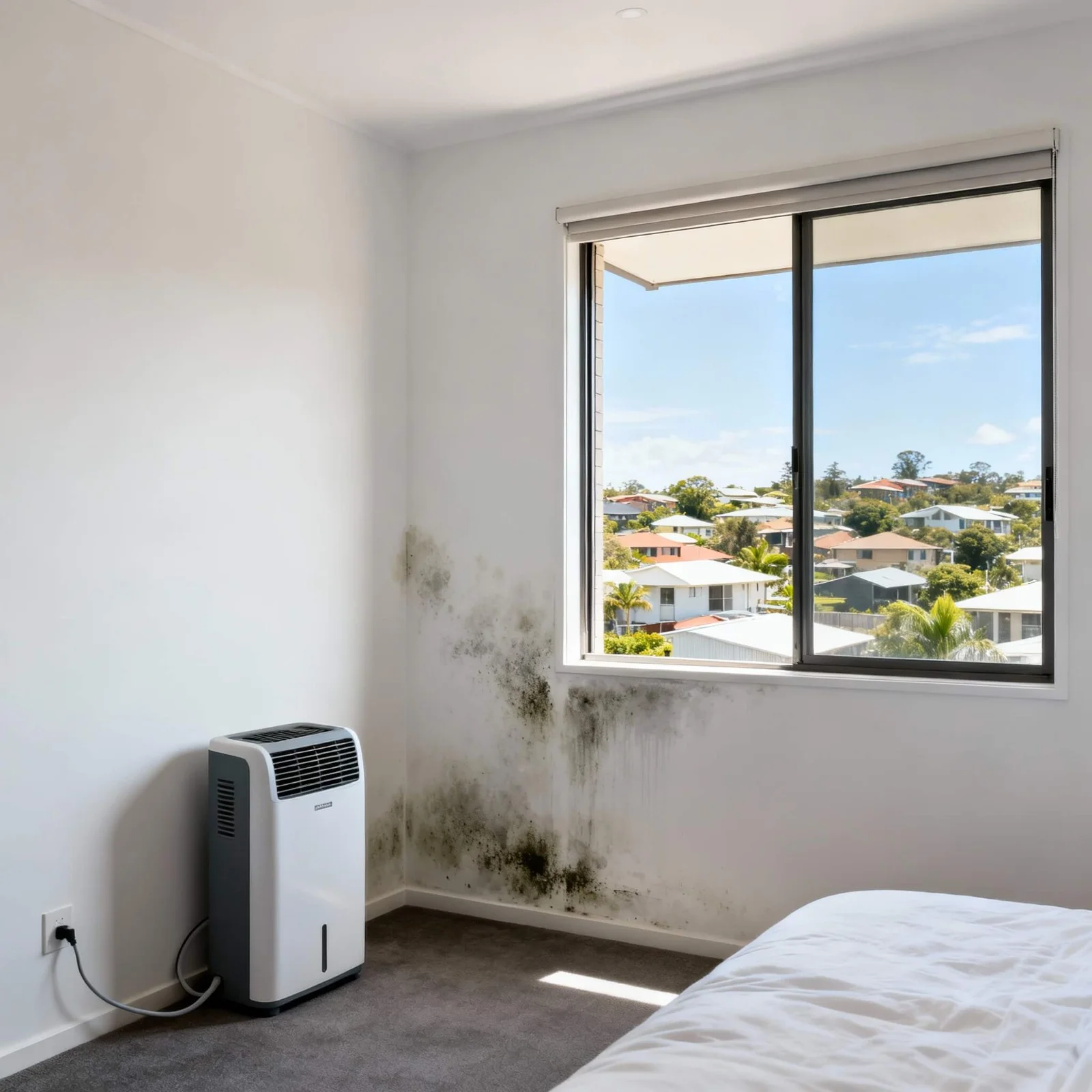
Mould is a common problem in rental properties especially in cities like Brisbane and the Gold Coast, where humidity and heavy rainfall are part of everyday life. The appearance of mould not only creates health concerns but can also lead to disputes between tenants and landlords. Understanding who is liable for mould issues and how to prevent them can save time, money, and unwanted stress.
Table of Contents
ToggleUnderstanding Mould in Rental Properties
Mould thrives in damp, poorly ventilated spaces and often appears on ceilings, windowsills, and walls. In many rental homes and apartments, lack of sunlight or blocked airflow can make bedrooms and living rooms especially susceptible.
The presence of mould can sometimes be blamed on building conditions, such as roof leaks or poor insulation, but is also influenced by everyday living habits. In humid climates, simple activities like breathing overnight, showering, or even owning a pet can increase indoor moisture levels.
Who Is Liable for Mould: Tenant or Landlord?
Liability for mould typically depends on the source of the problem:
- Tenant Responsibility: If mould develops because windows and doors are kept closed for long periods, or if there is poor housekeeping (like not attending to condensation and dampness), tenants may be expected to clean the mould. Good ventilation and regular cleaning are part of a tenant’s duty to keep the property in a reasonable state.
- Landlord Responsibility: If the mould is due to factors outside the tenant’s control such as structural defects, leaking roofs, broken windows, or inadequate ventilation provided by the property itself, the landlord must address these issues. Solutions can include fixing leaks, installing exhaust fans, or repainting rooms affected by long-term mould growth.
If the cause isn’t clear, open communication between tenants and landlords is essential. Tenants should notify property managers or landlords as soon as mould appears and request an inspection if structural problems are suspected.
How to Prevent Mould in Your Rental Home
Routine cleaning and moisture management go a long way in mould prevention. Here are some simple, effective tips:
- Ventilate every day: Open windows during the day to let fresh air circulate, even if only for short periods.
- Use a dehumidifier: These devices pull excess moisture from the air and are especially helpful in bedrooms, bathrooms, or rooms with little sunlight.
- Wipe down condensation: Each morning, use a clean towel to remove moisture from windows and sills.
- Try moisture absorbers: Products like DampRid or reusable humidity absorbers can make a difference in wardrobes or closed rooms.
- Regular cleaning: Clean and inspect blinds, curtains, and behind furniture, where mould can silently grow.
- Promptly fix leaks: Report any leaks, drips, or signs of water damage to your property manager without delay.
- Leave doors ajar: Allow air movement between rooms by partially opening internal doors.
Also read: Black mould in QLD rental properties
Safe And Natural Mould Removal
Small mould patches can often be managed with common household items:
- White vinegar: Spray undiluted white vinegar onto the mould, wait at least an hour, then scrub and wipe clean.
- Clove oil: As a natural fungicide, mix a quarter teaspoon of clove oil with one litre of water and spray lightly on the affected area. Leave overnight before wiping away. However, ensure pets are kept away, as some oils can be harmful to animals.
Avoid bleach for non-porous surfaces, as it may not prevent regrowth. If the problem returns rapidly, suspect a deeper moisture issue and involve your landlord or property manager.
Professional Help for Bond Cleaning
When it’s time to move out, any visible mould must be addressed before final inspection, or your bond might be at risk. Professional bond cleaning services in Brisbane and the Gold Coast offer thorough mould removal, using safe and effective methods to meet the high standards set by property managers.
Hiring experts can provide peace of mind that your rental meets inspection criteria, prevents health risks, and helps secure your full bond return.
Conclusion
Responsibility for mould removal in rental homes depends on the cause – habitual neglect versus property faults. However, regular cleaning, proper ventilation, and communication with your landlord are your best defences. For stubborn or recurring mould, professional cleaning ensures a smooth end-of-lease process and a healthier living environment.